
Summer Retreat in the Mountains: Why 1,000 m Beats the Coast in July and August
Updated
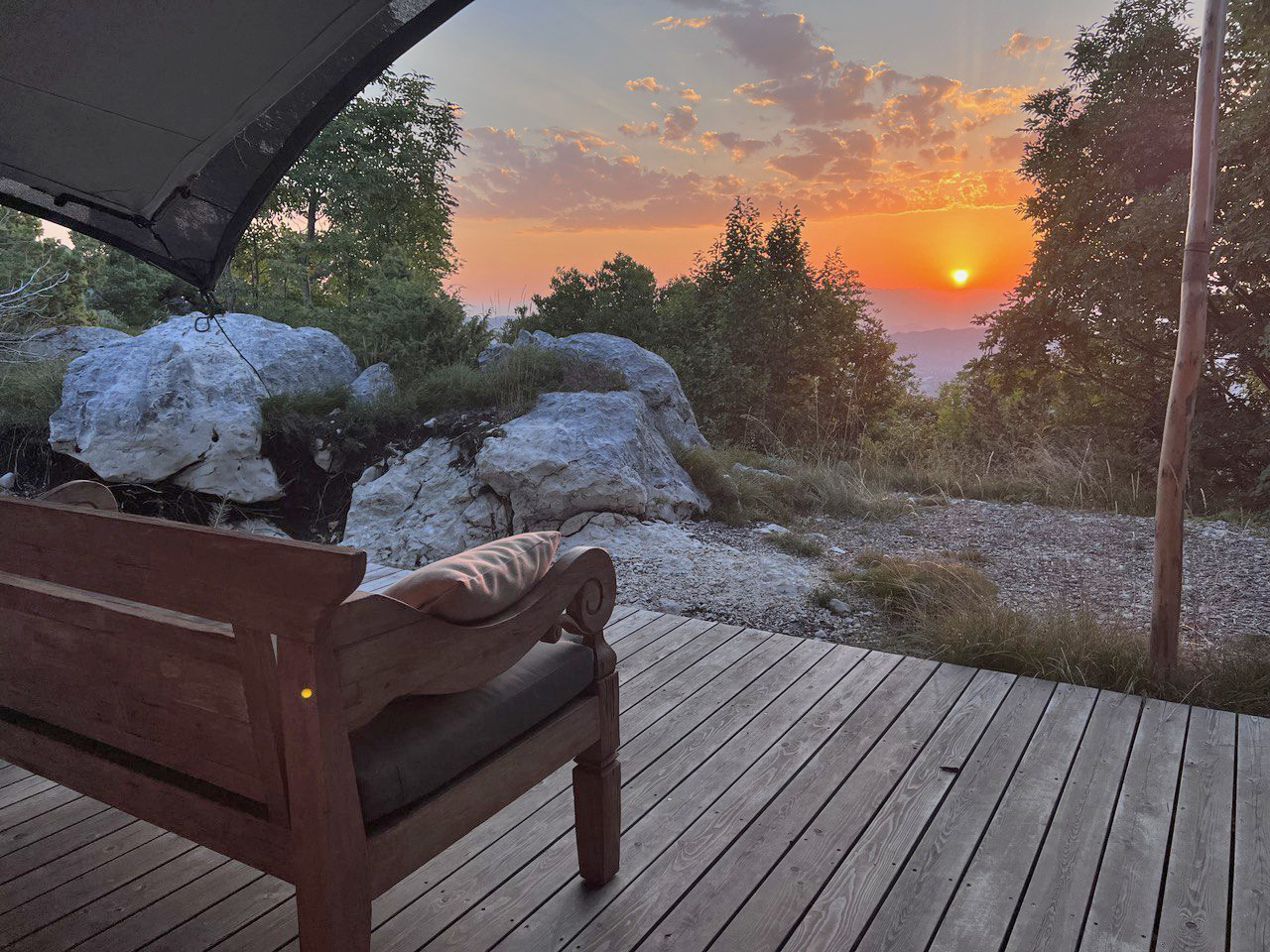
Planning a summer retreat in Southern Europe? Heat is the hidden risk. Here is why a mountain venue keeps your group comfortable, focused and asleep — and how to sell it.
Many retreat leaders avoid July and August. The reasons are understandable: the heat, the high-season flight prices, the feeling that "everyone is on the beach". Yet summer is also when most of your participants actually have holidays — teachers, parents, people with fixed annual leave. The question is not whether to run a summer retreat, but where.
Heat is the hidden risk of a summer retreat
On the Montenegrin coast, July and August afternoons regularly reach 30–35°C, and Podgorica, the capital, is hotter still. For a beach holiday that is fine. For a retreat it is a problem:
- Practice slots shrink to early morning and late evening.
- Rooms stay warm at night, so people sleep badly — and a tired group is a difficult group.
- Air-conditioning, crowds and traffic break the feeling of retreat you are trying to create.
What 1,000 metres changes
Air temperature drops roughly 0.6°C for every 100 metres of altitude. Lovćen National Park rises steeply behind the coast, so within an hour's drive of the sea you reach a completely different climate: fresh mornings, warm but comfortable afternoons and cool nights.
For a retreat that means:
- Better sleep. Cool nights do more for your group's mood than any programme detail. At ašuma, beds even have heated covers for chilly evenings.
- More usable practice time. Midday sessions are possible, so you are not squeezing everything into a 7 am slot.
- Fewer distractions. No beach bars, no traffic noise — just forest. The retreat feels like a retreat.
How to plan the day in summer
- Practise in the morning and late afternoon, and keep the hottest hours for rest, journaling, massage or a forest walk in the shade.
- Use water and heat on purpose: a sauna and cold plunge in the evening feels very different when the air is 18°C instead of 28°C.
- Plan one outing — a panoramic hike or a boat day on Skadar Lake — instead of daily excursions.
- Tell participants to pack layers: a light jacket for evenings is essential in the mountains.
How to sell a summer mountain retreat
"Escape the heat" is a strong, simple message in July and August. Lead with it:
- Show the contrast: the crowded coast below, the quiet forest above.
- Mention altitude and cool nights in the first lines of your retreat page.
- Target people who can only travel in school holidays: teachers, parents, corporate employees.
- Price smartly: in summer, venues in the mountains often have more open weeks than coastal ones, which can make dates easier to secure early.
Logistics checklist for a summer retreat in Montenegro
- Airports: Tivat (TIV), Podgorica (TGD), Dubrovnik (DBV). Book flights early — summer fares rise fast.
- Transfers: organise group shuttles from the airport; mountain roads are slower than they look on a map.
- Season: ašuma is open from 20 May to 5 October.
- Budget: use a calculator to estimate accommodation, meals, transfers and excursions before you set your participant price.
Check summer dates at ašuma
ašuma sits at about 1,000 m in Lovćen National Park, an hour from the Adriatic: eleven safari tents, a 145 m² practice hall, wood-fired banya and sauna, and chef-cooked vegetarian food — rented to one group at a time. July and August often still have open weeks. Check the availability calendar and build an estimate in the online calculator.